

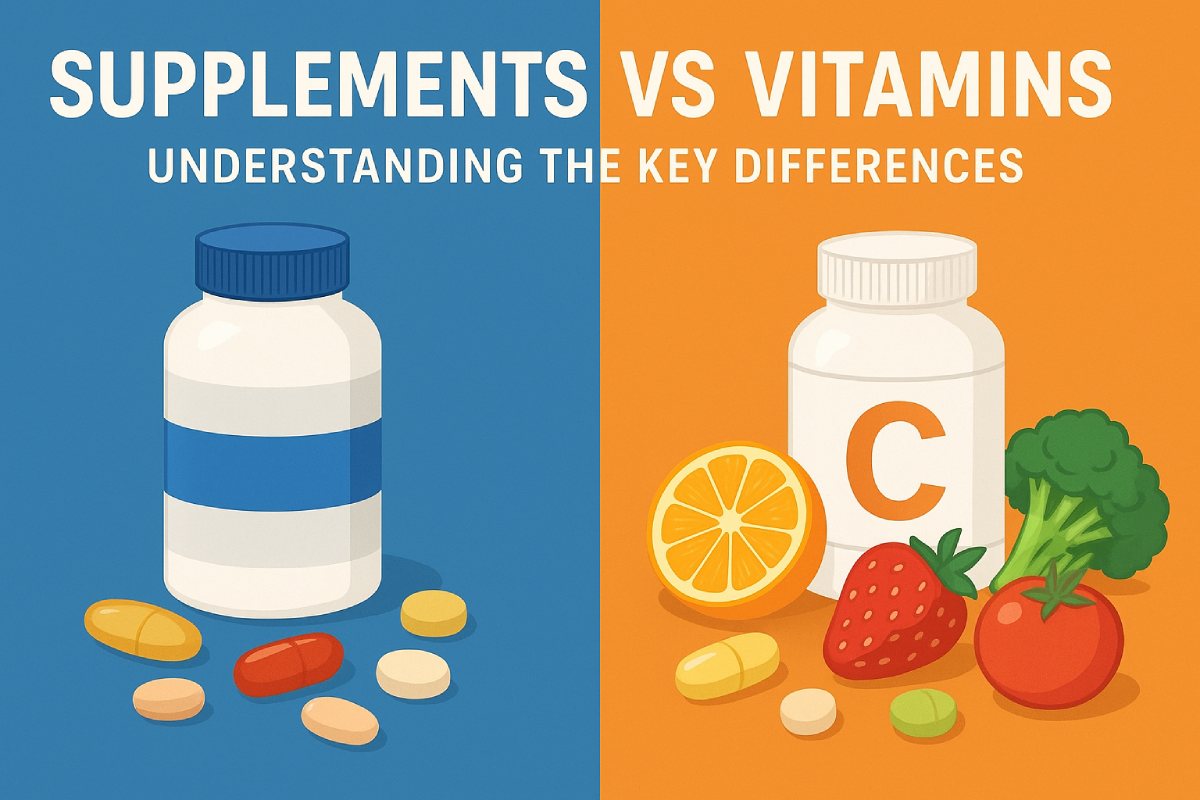
If you’ve ever stood in the supplement aisle and wondered why some bottles are labeled vitamins and others supplements, you’re not alone. The two terms are often used interchangeably — but they’re not the same thing.
For consumers, the confusion can lead to buying the wrong product for their needs. For brands and formulators, misunderstanding the difference can affect everything from labeling and compliance to product positioning and marketing.
In this guide, we’ll break down supplements vs vitamins, explore what sets them apart, and explain how those distinctions shape formulation, manufacturing, and quality control in today’s wellness industry.
Introduction: Why the Confusion Between Supplements and Vitamins?
Common Misconceptions
Most people assume vitamins and supplements are synonyms — both are things you take to “be healthier.” But in reality:
- Vitamins are a type of supplement.
- Supplements are a broad category that includes vitamins, minerals, herbs, amino acids, and more.
Think of it this way: all vitamins are supplements, but not all supplements are vitamins.
Importance of Understanding the Difference
Understanding this distinction matters because it affects:
- Labeling & Compliance – Vitamins and supplements are regulated under different classifications.
- Formulation & Sourcing – Vitamins are micronutrients, while supplements may include botanical extracts, enzymes, or proteins.
- Consumer Trust – Clarity builds credibility in an increasingly competitive wellness market.
What Are Vitamins?
Definition and Role in the Body
Vitamins are essential organic compounds the body needs in small amounts to function properly. They regulate metabolism, support immune health, aid in energy production, and promote cellular repair.
Since the human body can’t produce most vitamins on its own, they must be obtained from food or supplementation.
Types of Vitamins: Water-Soluble vs. Fat-Soluble
Vitamins are classified into two categories:
- Water-Soluble: These include Vitamin C and the B-Complex family (like B6, B12, niacin, and riboflavin). They dissolve in water and are not stored in the body, requiring daily replenishment.
- Fat-Soluble: These include Vitamins A, D, E, and K, which are absorbed along with dietary fats and stored in fatty tissue for future use.
Each plays a distinct role — for example, Vitamin D supports bone health, while B12 assists in energy metabolism.
Natural vs. Synthetic Vitamins
Vitamins can be sourced naturally from food or synthetically produced in laboratories.
- Natural vitamins are extracted from plants or animal sources.
- Synthetic vitamins are chemically identical but produced through industrial processes.
High-quality supplement manufacturers focus on bioavailability — ensuring the body can absorb and use the vitamin effectively, regardless of source.
What Are Supplements?
Broader Category of Health Products
Supplements include any product designed to enhance, support, or maintain specific aspects of health beyond basic nutrition. They can contain vitamins, minerals, herbs, enzymes, amino acids, or even probiotics.
Essentially, vitamins are one piece of the much larger supplement puzzle.
Types of Supplements
Supplements are incredibly diverse, including:
- Minerals – Calcium, magnesium, zinc, and iron
- Herbal extracts – Ashwagandha, echinacea, ginseng
- Amino acids – BCAAs, glutamine, creatine
- Probiotics & enzymes – For gut and digestion
- Protein & collagen powders – For performance and skin health
This range makes supplements both versatile and complex — especially when it comes to manufacturing and compliance.
When and Why People Take Supplements
People take supplements to:
- Fill nutritional gaps in their diets
- Improve energy, focus, or immunity
- Support specific goals like muscle recovery, skin health, or sleep
- Manage deficiencies caused by lifestyle, stress, or diet
For brands, the key is identifying these consumer pain points and formulating targeted solutions backed by credible science.
Supplements vs Vitamins: What’s the Difference?
Scope and Definition
- Vitamins are nutrients essential for life, often regulated as dietary ingredients.
- Supplements encompass vitamins and other functional compounds aimed at enhancing wellness.
A simple analogy: if vitamins are ingredients, supplements are the recipe.
Ingredients and Formulations
Vitamin formulas typically include one or more micronutrients at specific dosages (like Vitamin D3 or B12). Supplements, on the other hand, often combine multiple bioactives for synergistic benefits — such as a pre-workout blend or immune support formula.
Purpose and Usage
- Vitamins → Prevent or correct deficiencies.
- Supplements → Support or optimize specific functions (e.g., focus, sleep, muscle repair).
Both are beneficial — but their design and purpose differ fundamentally.
Regulatory and Labeling Differences
In the U.S., both vitamins and supplements fall under the Dietary Supplement Health and Education Act (DSHEA), but labeling rules vary depending on product type.
- Vitamins list % Daily Value for each nutrient.
- Supplements may use proprietary blends or non-nutritive actives (like herbal extracts).
That’s why accurate labeling and testing are critical for compliance.
Are Vitamins Considered Supplements?
Overlap and Classification
Yes — vitamins are technically a subcategory of supplements. The FDA defines dietary supplements as products containing vitamins, minerals, herbs, or other dietary ingredients.
So while all vitamins are supplements, not every supplement qualifies as a vitamin.
How They’re Marketed and Sold
Vitamins are usually sold as standalone products (like “Vitamin C 1000mg”), whereas supplements may be marketed around functions (“Immune Boost,” “Sleep Support,” “Hair & Skin Formula”).
The difference is more about consumer intent and positioning than legal classification.
Legal and Regulatory Definitions
Across regions:
- U.S.: Vitamins are a subset of dietary supplements under the FDA.
- EU: Vitamins are regulated as food supplements.
- New Zealand: They’re classified under Natural Health Products with dosage limits.
Understanding these nuances ensures global compliance for brands expanding internationally.
Manufacturing Differences Between Supplements and Vitamins
Ingredient Sourcing and Purity Standards
Vitamins rely on pharmaceutical-grade micronutrients sourced from verified suppliers. Supplements often include botanicals, extracts, or probiotics, which require additional testing for identity, potency, and purity.
Formulation and Dosage Requirements
Vitamin dosage is tightly controlled — you can’t exceed established tolerable upper limits. Supplement dosages, however, vary widely based on ingredient functionality and market trends.
Testing, Compliance, and Labeling Regulations
Both product types must comply with cGMP standards and undergo:
- Microbial testing
- Heavy metal analysis
- Stability and potency testing
But supplements often demand extra formulation testing to confirm that active ingredients remain stable in blends.
Packaging and Shelf Life Considerations
Vitamin tablets and capsules are relatively stable, while supplements containing herbal extracts, enzymes, or probiotics may need moisture-resistant packaging or refrigeration. Proper packaging ensures potency and consumer safety.
Quality and Efficacy: What Consumers Should Know
How to Read Labels
Look for:
- Active ingredient amounts
- Serving sizes
- Certifications
- Expiration date
Avoid vague “proprietary blends” that don’t disclose exact ingredient quantities.
Third-Party Testing and Certifications
Trustworthy brands work with third-party labs to verify purity and potency. Certifications like NSF Certified for Sport, USP Verified, or ISO-accredited testing prove accountability.
Misleading Marketing Claims
Be wary of supplements that claim to “cure,” “treat,” or “prevent” diseases — these are pharmaceutical claims and not allowed under FDA guidelines. Stick with structure/function language like “supports immune health.”
Choosing What’s Right for You
When to Choose a Vitamin Only
If you have a specific deficiency — like Vitamin D in winter or Vitamin B12 for energy — a simple vitamin supplement may be enough.
When a Broader Supplement May Help
If you’re targeting a goal or system, such as improving digestion, stress response, or exercise recovery, a broader supplement formula with multiple ingredients is likely more effective.
Consulting with Healthcare Providers
Always consult a healthcare professional before starting new supplements, especially if you’re pregnant, on medication, or managing chronic conditions.
Final Thoughts: Clarity for Better Health Decisions
Understanding the difference between supplements vs vitamins helps both consumers and brands make smarter decisions.
For consumers, it means choosing products that actually meet your needs. For brands, it means manufacturing and labeling your products correctly — and communicating transparently with your customers.
Clarity builds trust. And in an industry where reputation matters as much as results, education is your greatest marketing tool.
Partner with Enhanced Labs
At Enhanced Labs, we manufacture both vitamin and broader supplement formulations with full regulatory compliance and premium-grade ingredients.
From sourcing and R&D to encapsulation, flavoring, and packaging, our Miami facility brings your concept to life with precision and care.
Whether you’re developing a targeted vitamin line or a complete wellness stack, Enhanced Labs provides the science, structure, and support your brand needs to thrive.
Let’s create your next standout formula — safely, effectively, and intelligently.