
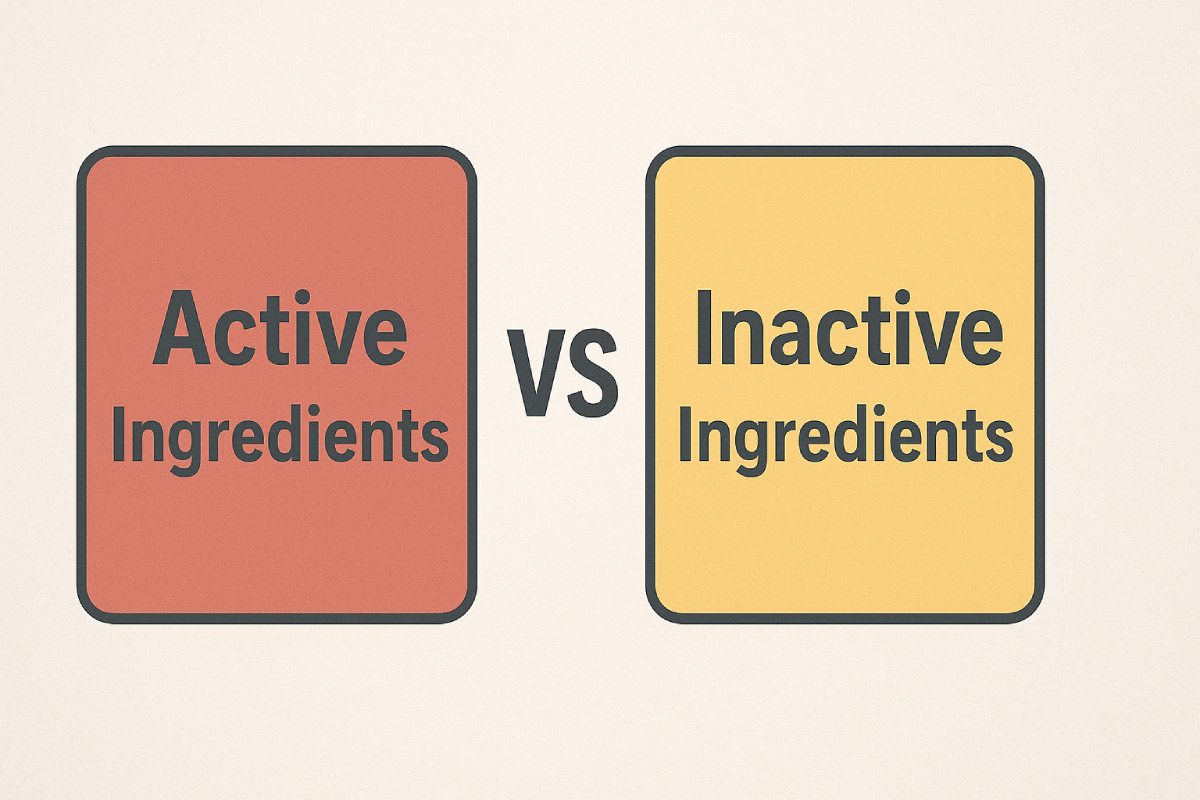
Every supplement label tells a story — a list of ingredients, dosages, and benefits that define the product’s quality and effectiveness. But if you’ve ever looked closely, you’ll notice something interesting: ingredients are usually split into two categories — active and inactive.
Understanding the difference isn’t just useful for consumers; it’s essential for brands developing supplements that perform well and meet modern expectations for transparency. Both types play critical roles in how a supplement looks, tastes, and works. Let’s break down what each does, why they matter, and how to use them strategically in supplement manufacturing.
What Are Active Ingredients?
Active ingredients are the functional components of a supplement — the ones responsible for delivering measurable effects or health benefits. They’re the stars of the show, providing the outcomes consumers expect, such as more energy, better sleep, improved immunity, or sharper focus.
In other words, the active ingredient is why the consumer buys the product.
Examples of Active Ingredients
- Vitamins and minerals like Vitamin D, Zinc, and Magnesium
- Botanical extracts such as Ashwagandha, Echinacea, and Elderberry
- Amino acids like BCAAs, L-Theanine, or Creatine
- Probiotics and enzymes for gut health
- Adaptogens and nootropics for stress relief or cognitive support
Each of these provides a specific function, and their concentration in the formula determines potency and effectiveness.
Role in Supplement Performance
Active ingredients directly impact a supplement’s:
- Efficacy: The physiological effect or benefit it provides
- Dosage: The amount required to achieve that benefit safely
- Positioning: How the product is marketed — energy, immunity, beauty, etc.
For example, a sleep gummy might feature melatonin and magnesium as actives, while an energy capsule could highlight caffeine and L-tyrosine.
What Are Inactive Ingredients?
While actives get all the attention, inactive ingredients are the supporting cast that makes the product stable, effective, and appealing. They don’t contribute to the supplement’s intended effect, but they make it possible for the active ingredients to do their job properly.
These components can influence everything from flavor and texture to absorption and shelf life.
Examples of Inactive Ingredients
- Fillers: Add bulk or consistency (e.g., rice flour, microcrystalline cellulose)
- Binders: Hold tablets or capsules together (e.g., cellulose, starch)
- Flow agents: Prevent clumping and ensure even capsule filling (e.g., magnesium stearate, silica)
- Sweeteners and flavors: Improve taste, especially in powders or gummies
- Colorants: Provide visual appeal and branding consistency
- Preservatives: Extend shelf life and prevent degradation
Without these components, supplements would be unstable, unpalatable, or impossible to manufacture at scale.
Why Inactive Doesn’t Mean Unimportant
Even though they don’t directly impact health outcomes, inactive ingredients are essential for:
- Consistency and quality control
- Ease of manufacturing and encapsulation
- Shelf stability and freshness
- Consumer experience — taste, mouthfeel, and visual appeal
The right combination of inactive ingredients ensures that each capsule, gummy, or powder scoop delivers the same experience every time.
How Active and Inactive Ingredients Work Together
Think of actives and inactives as a partnership. Active ingredients deliver the function, while inactive ingredients ensure that function remains stable, bioavailable, and enjoyable.
For example:
- A probiotic capsule includes actives (live bacteria) and inactives (encapsulation agents that protect those bacteria from heat and moisture).
- A collagen drink mix contains actives (collagen peptides) and inactives (flavor systems, natural sweeteners, and flow agents).
When combined correctly, they create a formula that performs consistently while meeting consumer expectations for quality and experience.
Formulation Considerations for Brands
1. Ingredient Compatibility
Not all actives and inactives mix well together. Some vitamins oxidize easily or react with flavoring agents. Expert formulators choose combinations that maintain stability, potency, and flavor.
2. Bioavailability
Inactive ingredients can enhance absorption — for instance, liposomal delivery systems or oil-based carriers for fat-soluble vitamins like D and K. Choosing the right carrier improves how effectively actives are utilized by the body.
3. Clean Label Appeal
Modern consumers are label-savvy. They prefer supplements free from unnecessary additives, artificial colors, or synthetic sweeteners. Choosing clean-label inactives like natural flavors or plant-based binders can give your brand a competitive edge.
4. Texture and Flavor Optimization
Inactive ingredients like natural sweeteners, gum bases, and emulsifiers improve mouthfeel and taste — especially in gummies, powders, and shots. This helps drive repeat purchases by enhancing the overall experience.
5. Regulatory Compliance
Both actives and inactives must meet strict safety and labeling requirements. Brands must ensure ingredient transparency, proper dosage disclosure, and compliance with labeling regulations to build consumer trust.
Common Mistakes to Avoid
- Overusing fillers to cut costs — this reduces potency and damages credibility.
- Ignoring inactive ingredient interactions — can lead to clumping, discoloration, or reduced stability.
- Using artificial colors or flavors — consumers increasingly prefer natural alternatives.
- Neglecting sensory testing — taste, smell, and texture affect product success more than ever.
Trends in Ingredient Selection
- Natural Sweeteners and Colors: Stevia, monk fruit, beetroot, and spirulina are replacing synthetic additives.
- Plant-Based Excipients: Vegan capsule shells and cellulose binders align with clean-label trends.
- Functional Carriers: Prebiotic fibers, MCT oils, and natural emulsifiers enhance absorption.
- Minimalist Formulas: “Less is more” — consumers trust short, transparent ingredient lists.
The Role of Transparency in Branding
Clear labeling builds confidence. When consumers can easily distinguish between the active and inactive ingredients — and understand why each one is there — your brand earns credibility and loyalty.
Highlighting the purpose of both categories on your packaging or website helps position your brand as authentic and science-driven.
Final Thoughts: The Balance Behind Every Great Supplement
The perfect supplement formula is about more than just active ingredients — it’s about balance. Actives deliver the power, but inactives create the platform that allows that power to shine.
Together, they shape a supplement’s quality, taste, and trust factor — all critical in today’s health-conscious market. For supplement brands, understanding that relationship is the key to creating products that stand out for both performance and presentation.
Partner with Enhanced Labs
At Enhanced Labs, we combine deep formulation expertise with a commitment to clean, transparent ingredient sourcing. Whether you’re developing capsules, gummies, powders, or drinks, we help you craft formulas that balance function and form — using premium actives supported by smart, safe, and effective inactives.
From concept to packaging, our team ensures every ingredient serves a purpose and every product delivers results.
Let’s build your next standout supplement — designed for performance, built with integrity.